
Optical Inspection Across Demanding Industries
Automotive OEM glazing
THE CHALLENGE
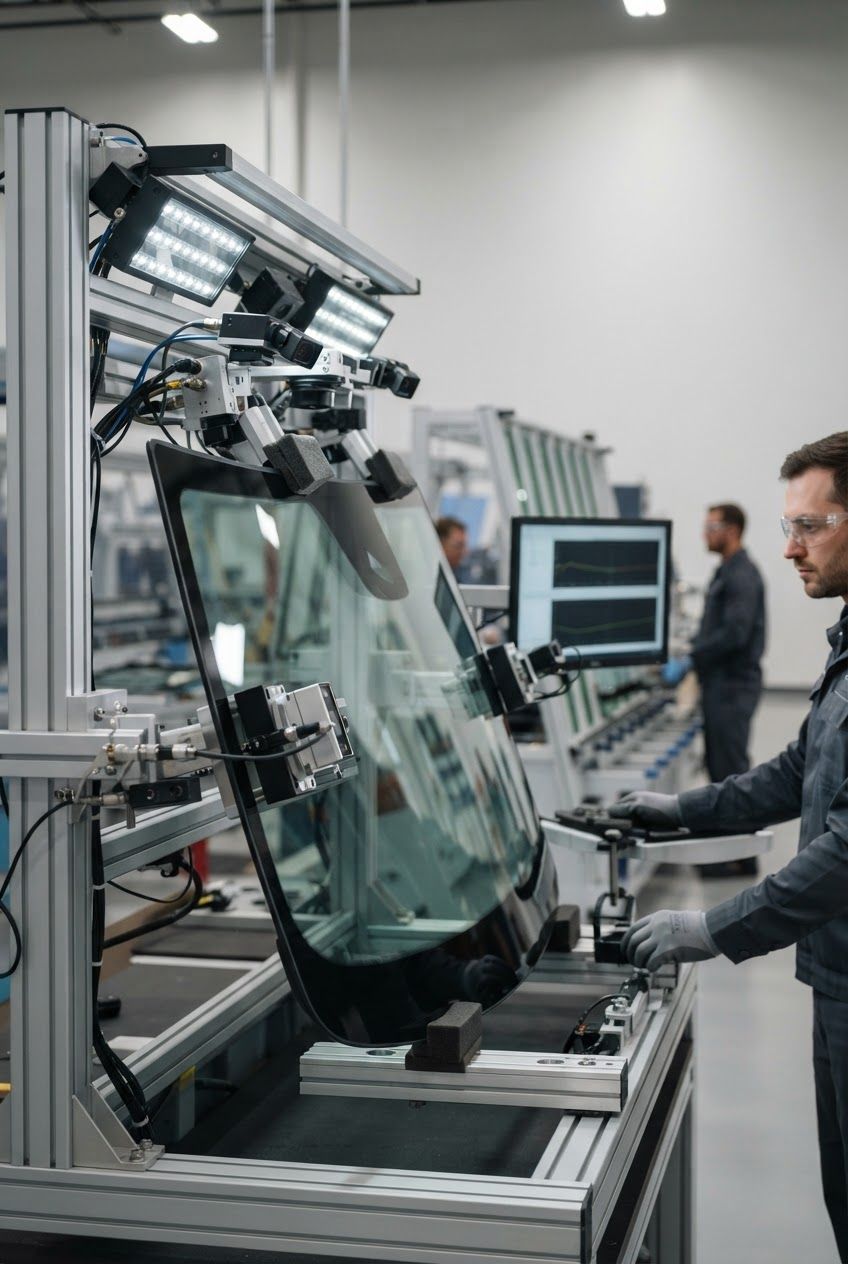
For automotive OEMs (Original Equipment Manufacturers), windshield quality is becoming increasingly important. A windshield is not only a structural and protective component. Its geometry and optical properties can directly influence the driver’s visual experience and the performance of technologies integrated into the vehicle.
This is particularly relevant as modern vehicles increasingly incorporate Head-Up Displays, cameras and ADAS systems. The windshield becomes part of the optical environment of these systems, meaning that small geometric or optical variations can have an impact on their performance.
Snellium Capabilities
Snellium provides optical inspection and metrology technologies that allow manufacturers and quality teams to characterize windshield geometry and optical behaviour in a non-contact and repeatable way.
- Validate windshield geometry
- Investigate optical characteristics
- Assess surface quality
- Support HUD performance evaluation
- Evaluate the influence of the windshield on ADAS cameras
- Generate objective data for quality and validation
The aim is to move beyond simply checking whether a component is within dimensional tolerances and towards understanding how the windshield actually performs in the vehicle environment.
Automotive Aftermarket Glazing
THE CHALLENGE
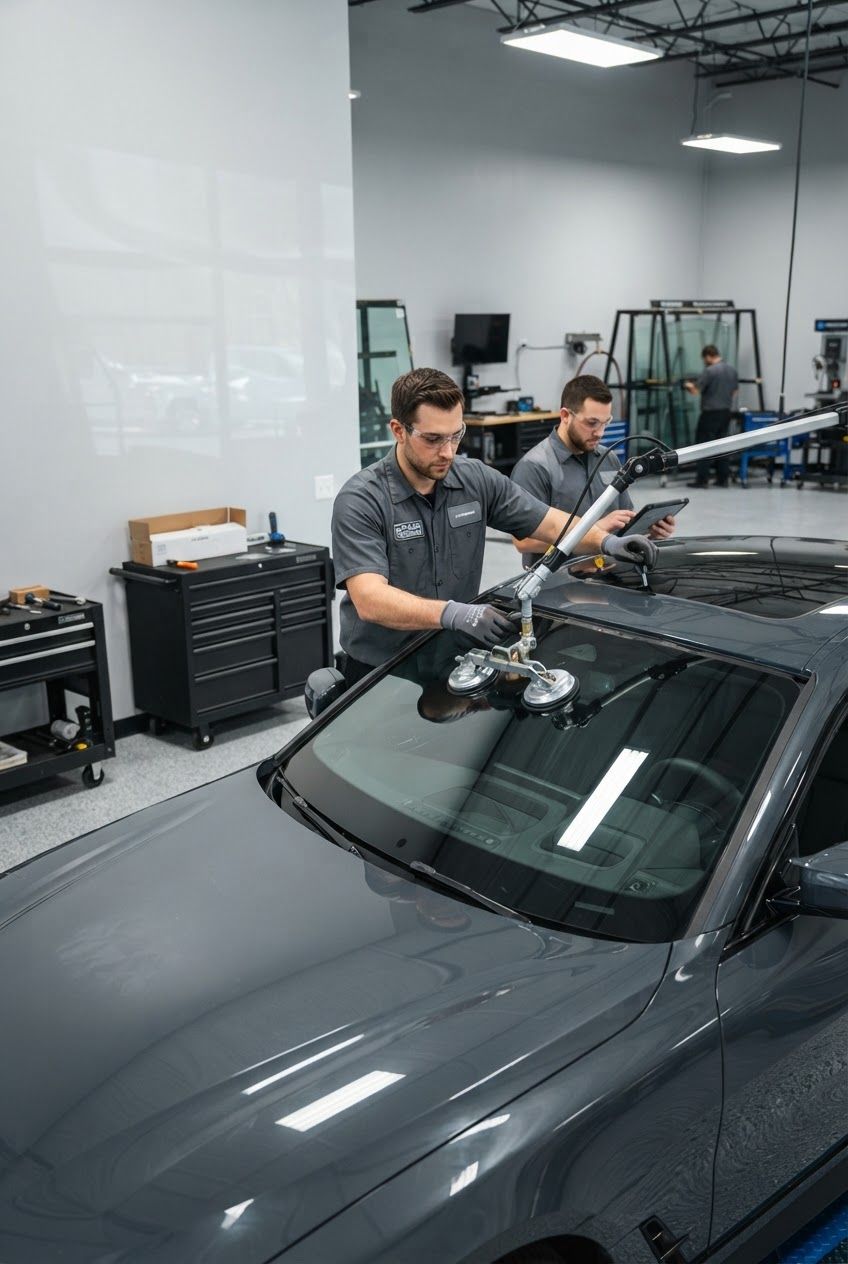
The automotive aftermarket glass industry requires consistent quality and reliable optical performance across a wide range of glazing products and designs.
Variations in geometry, curvature and optical properties can affect the overall performance of automotive glazing and the systems that rely on it. Accurate characterization is therefore essential to assess product quality, support design processes and ensure consistent performance.
Snellium Capabilities
Snellium’s optical measurement technologies can be used to characterize an original windshield without physical contact. The measured information can then serve as a digital reference for the development of an equivalent component.
This becomes particularly important when the windshield interacts with other vehicle technologies such as HUD and ADAS, where reproducing the right optical behaviour can be just as important as reproducing the overall shape.
- Characterize original windshields
- Measure geometry and curvature
- Assess optical properties
- Support HUD and ADAS optical behavior
Aeronautical Transparencies Inspection
THE CHALLENGE
Aeronautical components often combine complex geometries with demanding quality and optical requirements.
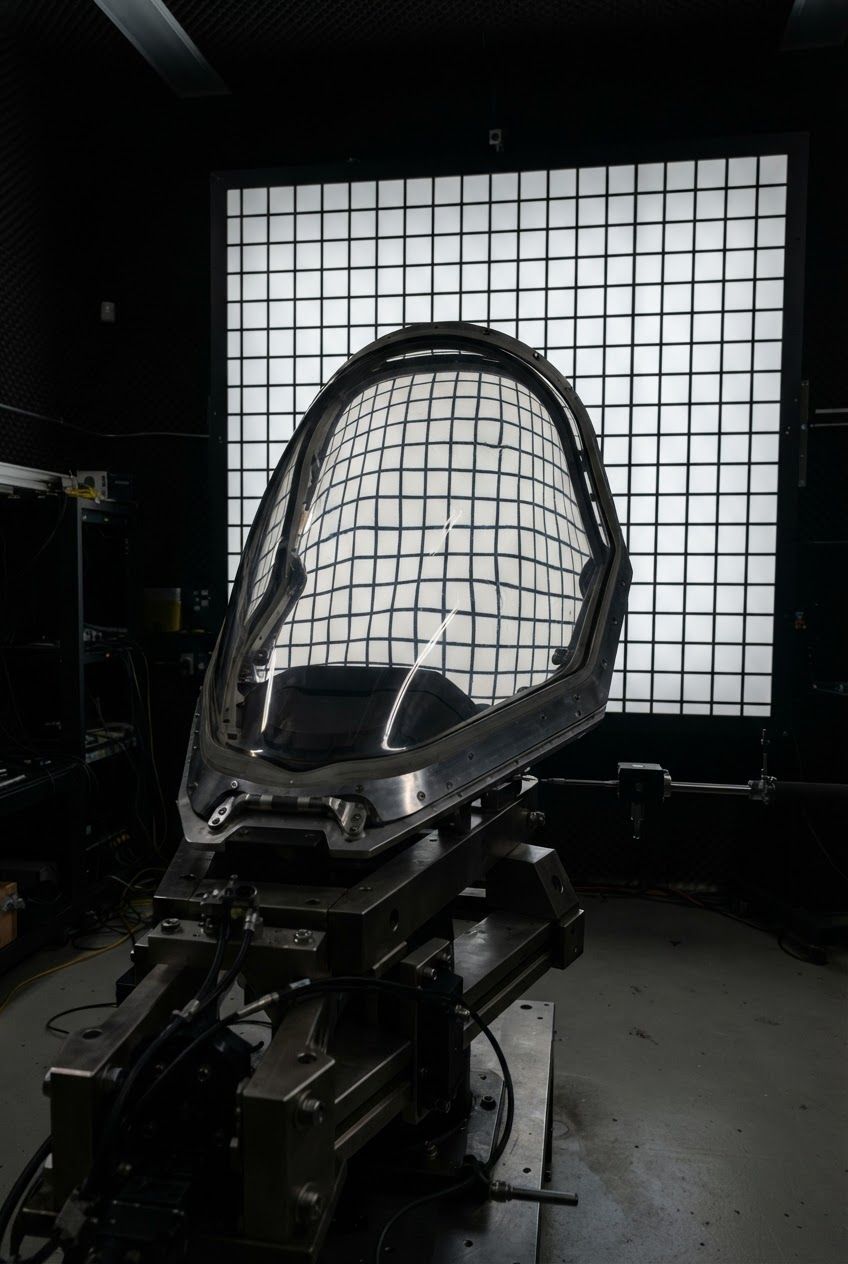
Curved transparencies are a good example: their geometry directly influences their optical behaviour, while conventional contact measurement can be difficult for large or complex surfaces.
Snellium Capabilities
Snellium provides non-contact optical metrology to characterize the shape and optical behaviour of these components.
- Geometry measurement
- Optical distortion characterization
- Non-contact inspection
- Quantitative measurement data
Car Damage Inspection
THE CHALLENGE
Paint Quality Inspection
For insurance companies, leasing and rental companies, vehicle remarketing, airports and other fleet operators, assessing the condition of a vehicle quickly and reliably is essential.
A vehicle may appear visually intact while previous damage has been repaired and covered by a new layer of paint.
Detecting differences in paint layers can therefore be important to identify repainted areas, concealed repairs or damage that has been covered, particularly during vehicle assessment, rental returns and second-hand vehicle inspections.
The challenge is to identify these variations objectively and reliably, even when the underlying damage is no longer directly visible.
Vehicle Tracking
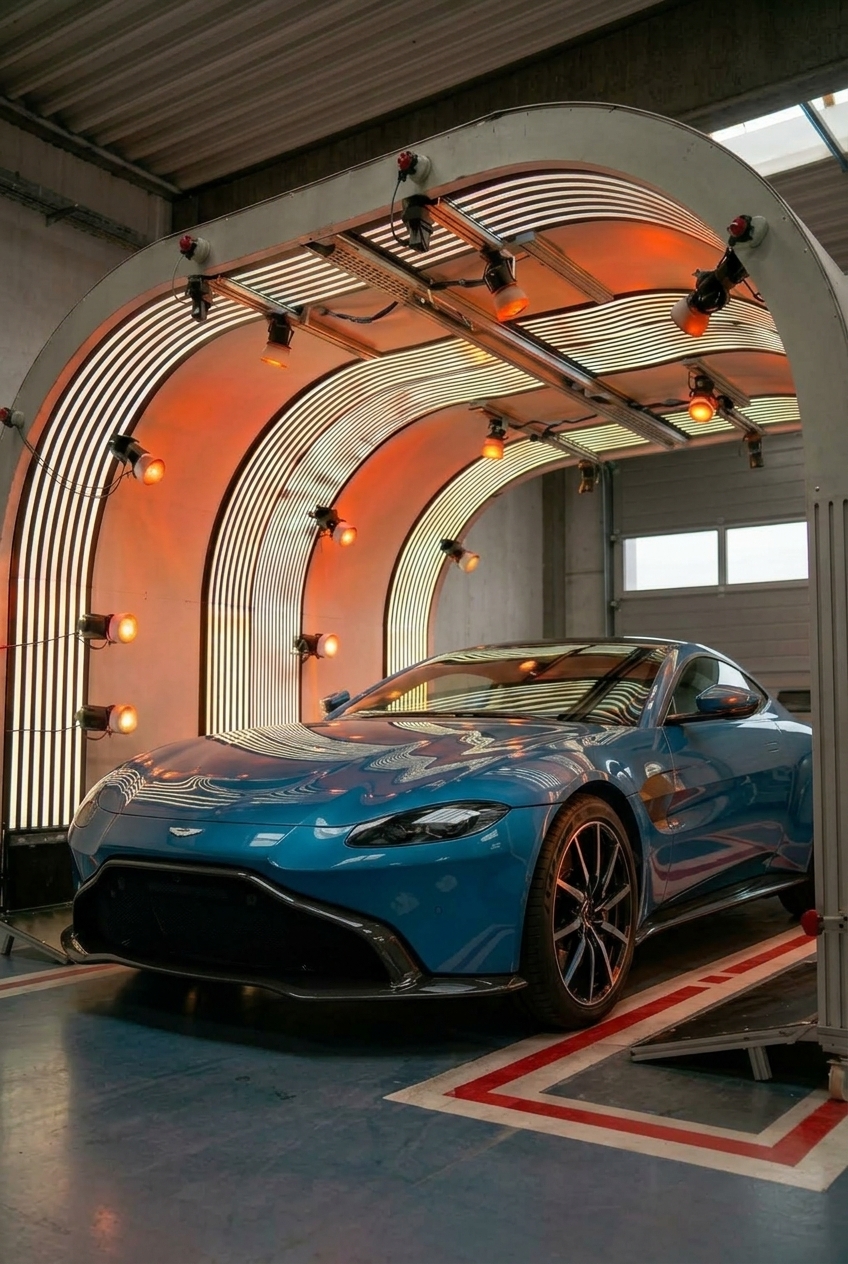
During automated vehicle inspection, cameras capture images as the vehicle moves through the inspection tunnel. To determine the location of each damage detected on the vehicle, the system needs to continuously track the vehicle’s position and movement.
Today, this can require stickers or physical markers to be placed on each vehicle before entering the tunnel. While these markers help the system track the vehicle and locate detected damage, applying them to every vehicle adds a step and slows down the inspection flow.
The challenge is to track each vehicle reliably without using stickers or physical markers, allowing vehicles to move continuously through the inspection tunnel and reducing the time required for each inspection.
Snellium Capabilities
Snellium’s optical technologies can be integrated into existing vehicle inspection tunnels to extend what they can measure and to make the inspection flow faster.The aim is to upgrade these installations with objective paint evaluation and marker-free tracking, without rebuilding the infrastructure.
- Detect repainted areas
- Track vehicles automatically
- Non-contact inspection
- Quantitative measurement data
Related Technologie
- Paint Quality Inspection
- Tracking System