
Projects
THEIA
AI-Enabled Multiview Deflectometry for Curved Glass
2025 – 2028
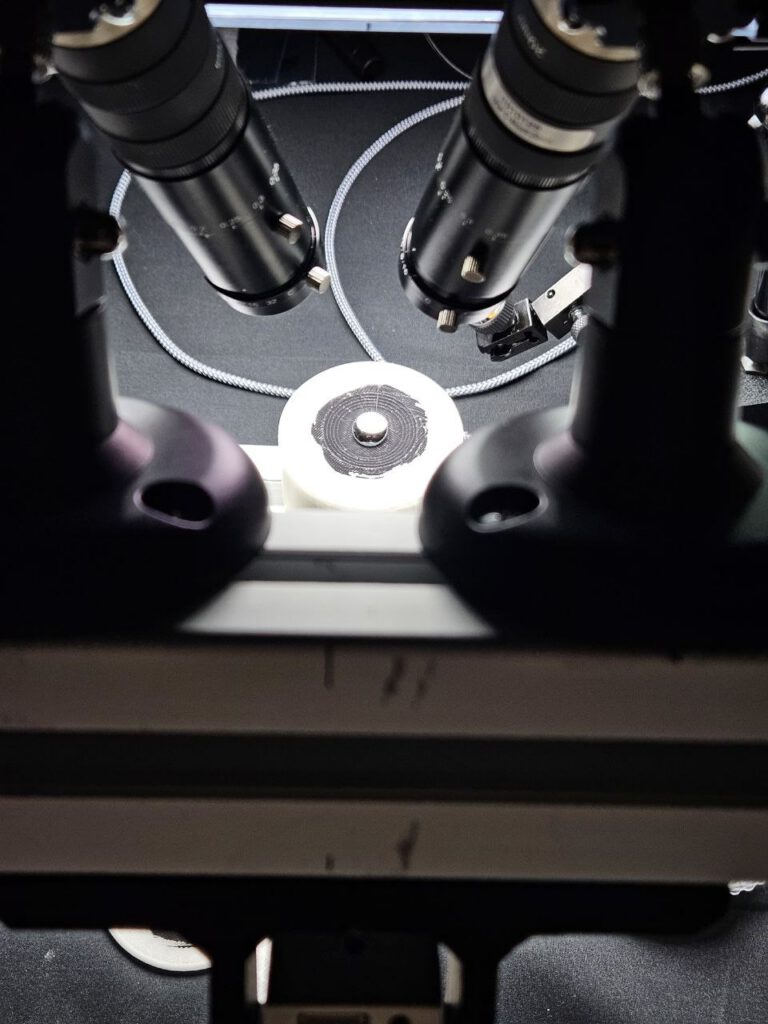
THEIA is a research and development project focused on AI-enabled multiview deflectometry for curved transparent components.
The project brings together Snellium, VUB/ETRO and VUB/R&MM, with support from Innoviris through the Joint R&D – Physical AI programme.
THEIA addresses two demanding applications where precise optical and geometrical inspection is essential: automotive glazing for ADAS systems and intraocular lenses (IOLs) used in ophthalmic applications.
From Multiple Views to Intelligent Inspection
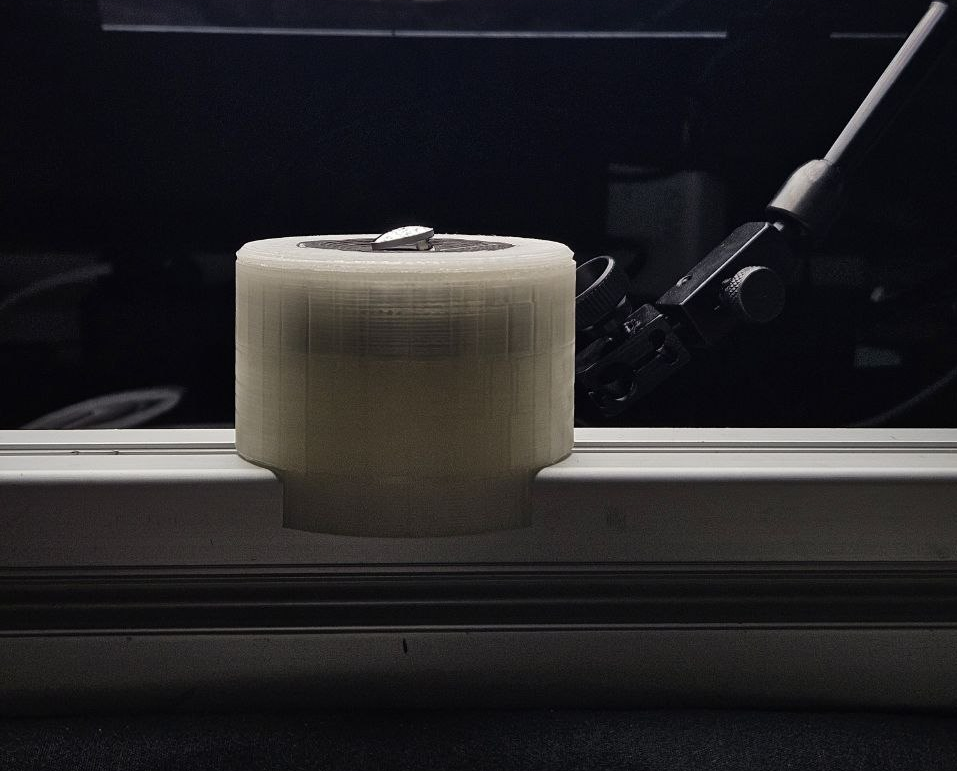
The project combines multiview deflectometry, optical metrology and artificial intelligence to develop new methods for characterizing the geometry and optical properties of curved transparent components.
The objective is to move towards more flexible and automated inspection technologies capable of providing detailed and quantitative information about complex optical surfaces.
Two Applications, One Optical Technology
Automotive Glazing
Characterizing windshield geometry and optical properties in areas dedicated to ADAS systems.
Intraocular Lenses
Characterizing the optical and geometrical properties of lenses used to restore vision following cataract surgery.
THEIA builds on Snellium’s software-based deflectometry technology and explores its potential for automated industrial inspection.
Aeronautical Transparencies Part
Aeronautical glass inspection: virtual feasibility study
With CPS – CAD Professional Systems. 2025
Overview
Aircraft transparencies are complex optical components whose shape and optical quality directly affect what pilots and onboard cameras see. In collaboration with CPS – CAD Professional Systems, an engineering company with expertise in aerospace and in the optical inspection of aircraft transparencies, Snellium carried out a virtual study to evaluate how its optical inspection technology can be applied to this type of glass.
The challenge
Aeronautical transparencies combine large dimensions, strong curvature and demanding optical requirements. Any new measurement approach must be validated before it is deployed on real parts.
What we did
CPS provided digital models of aeronautical glasses. Using this models, Snellium ran virtual tests that reproduced the measurement of the part with its deflectometry-based inspection technology:
- Optical distortion: simulation of horizontal and vertical optical distortion and of horizontal and vertical MTF at half-Nyquist frequency.
- Shape reconstruction: simulation of the reconstruction of the glass shape.
Both tests were performed without needing the physical parts.
Outcome
The study showed the potential of the approach for aeronautical transparencies and identified the next steps to extend it to the full surface of large, strongly curved glasses: adapting the chart design and the reconstruction model to the most curved areas, and adding cameras to cover the whole part.