
The Head-Up Display Inspector
THE CHALLENGE
The HUD system
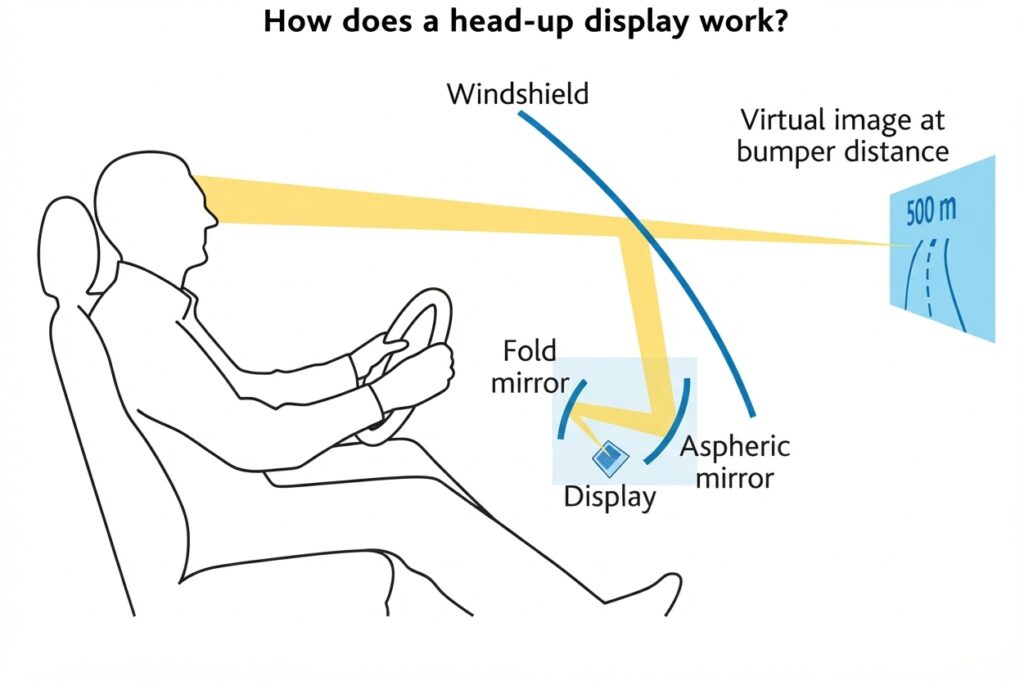
A Head-Up Display (HUD) projects key driving information, such as speed, navigation and alerts, directly into the driver’s line of sight. A projection unit in the dashboard generates the image, which is reflected by the windshield and appears to float ahead of the vehicle. Because the driver does not need to look away from the road to read this information, their eyes stay focused on the traffic ahead, which improves safety and reduces distraction.
The windshield is part of the HUD system
The HUD area of the windshield is part of the optical system, and its geometry directly influences the image seen by the driver.
Small variations in curvature and shape can introduce astigmatism, distortion, ghosting and binocular divergence, degrading the quality and clarity of the projected image.
When these optical effects become significant, the HUD image may become difficult to read or even unusable. In some cases, poor image quality can also affect the driver’s visual comfort, potentially causing eye strain or dizziness and raising safety concerns.
When the problem is discovered too late
Currently, no 100% quality inspection process can guarantee that the HUD will meet its design performance before the windshield is installed on the vehicle.
If an optical issue is discovered after installation, the component may need to be reworked or replaced. This can result in additional costs and production delays.
The challenge is therefore to predict and evaluate HUD performance before installation, using the actual geometry of the windshield and the intended viewing conditions.
The HUD inspector is Snellium’s solution for this application. It enables the optical characterization of the windshield in the HUD area and evaluates its impact on the projected image and driver’s viewing experience.
WHAT IS THE HUD INSPECTOR?
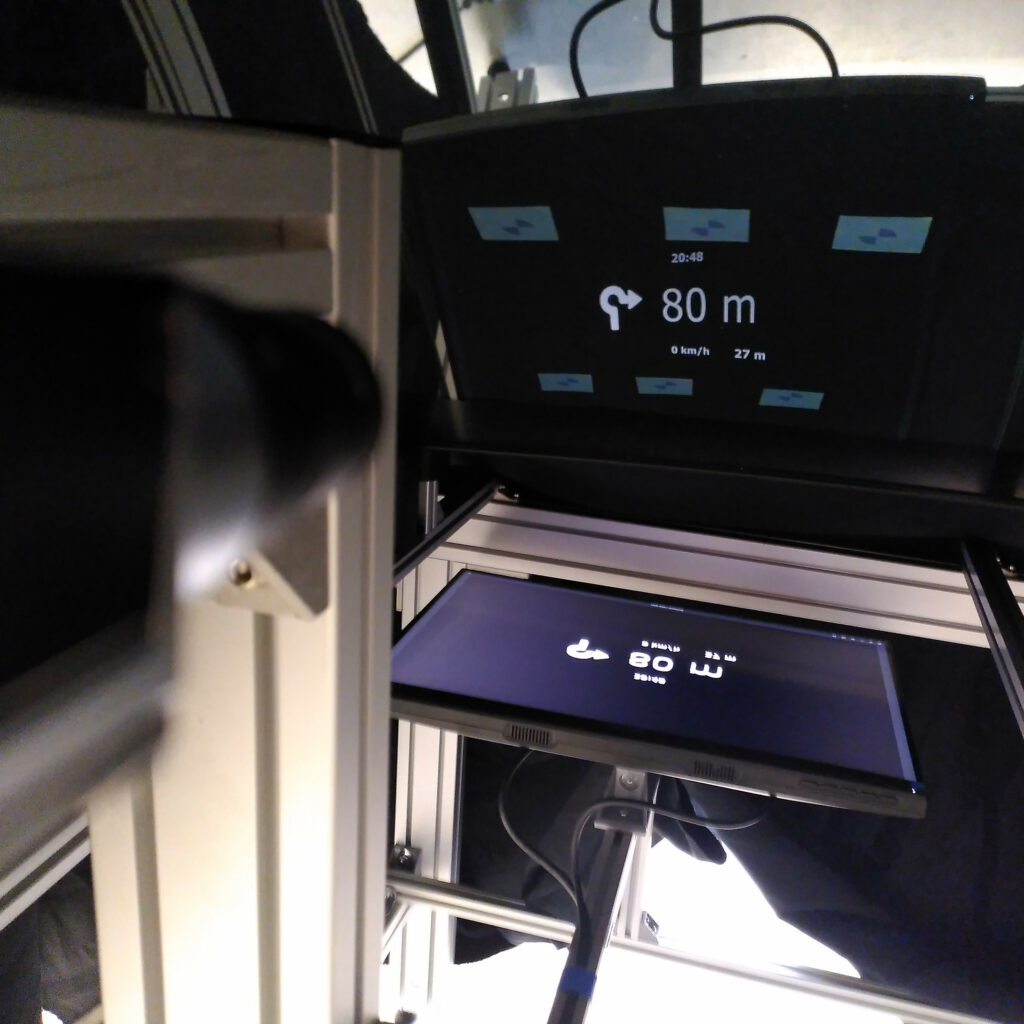
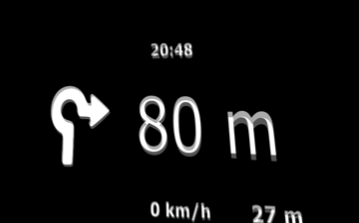
HUD Inspector measures the windshield geometry within the HUD area and retrieves key performance indicators (KPIs) such as astigmatism, image distortion, ghosting and binocular divergence.
It enables the simulation and evaluation of the driver’s visual experience before the windshield is installed on the vehicle, providing insight into the expected HUD image quality at an early stage of the manufacturing and validation process.
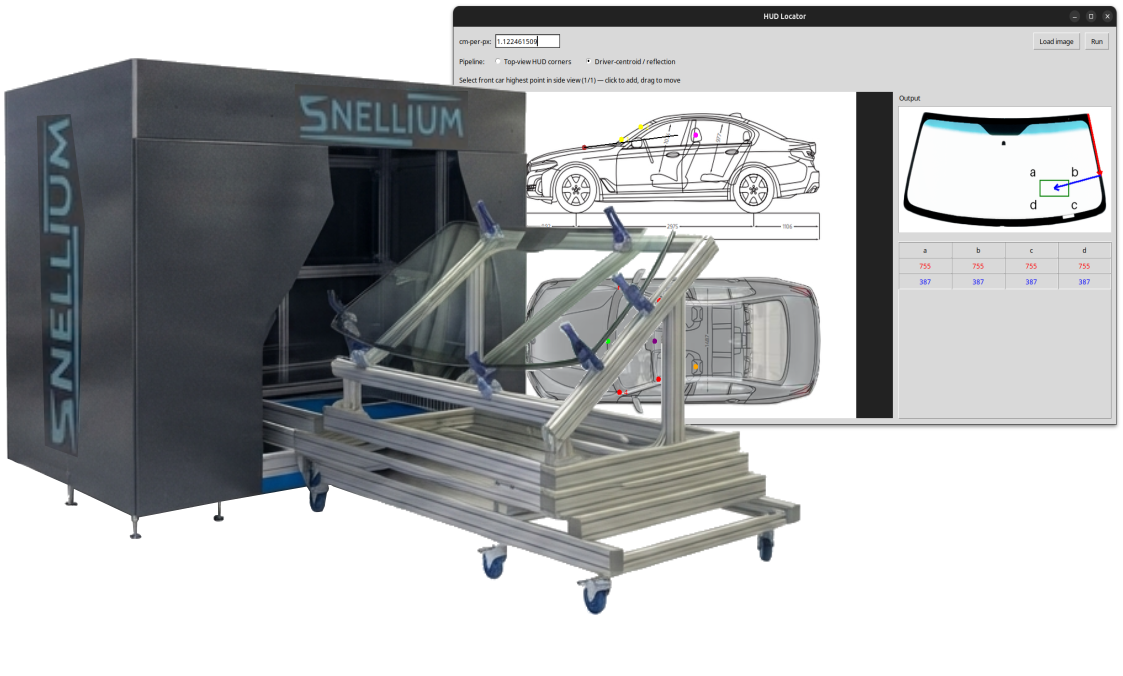
The position of the HUD area on the windshield is defined using HUD Locator software, which also provides the driver’s eye-box position relative to the windshield. This information allows the HUD performance to be evaluated according to the intended installation and viewing conditions.
WHAT CAN BE EVALUATED?
Depending on the application, configuration and specifications:
Inner / Outer shape map
Measure the inner and outer shape of the HUD area to characterize the windshield geometry
Inner / Outer Curvature Map
Characterize the inner and outer curvature of the HUD area and identify local variations in geometry
Wedge Map
Characterize the wedge angle between the inner and outer surfaces of the windshield and evaluate its contribution to optical deviation and HUD image quality
Image Distortion
Characterize image distortion caused by the windshield geometry and evaluate its effect on the projected image
Image Shift (Ghosting)
Evaluate ghosting effects in the projected image, which can reduce image clarity and visual comfort
Astigmatism
Measure astigmatism in the HUD area to evaluate variations in image sharpness and their impact on the projected image
Binocular Divergence
Measure binocular divergence to evaluate differences between the images perceived by the driver’s two eyes
HUD Image Driver Experience
Evaluate the potential impact of windshield optical performance on visual comfort and the driver’s viewing experience
Inner / Outer shape map
Measure the inner and outer shape of the HUD area to characterize the windshield geometry
Inner / Outer Curvature Map
Characterize the inner and outer curvature of the HUD area and identify local variations in geometry
Wedge Map
Characterize the wedge angle between the inner and outer surfaces of the windshield and evaluate its contribution to optical deviation and HUD image quality
Image Distortion
Characterize image distortion caused by the windshield geometry and evaluate its effect on the projected image
Image Shift (Ghosting)
Evaluate ghosting effects in the projected image, which can reduce image clarity and visual comfort
Astigmatism
Measure astigmatism in the HUD area to evaluate variations in image sharpness and their impact on the projected image
Binocular Divergence
Measure binocular divergence to evaluate differences between the images perceived by the driver’s two eyes
HUD Image Driver Experience
Evaluate the potential impact of windshield optical performance on visual comfort and the driver’s viewing experience
WHY USE THE HUD INSPECTOR?
Early Validation
Evaluate potential HUD image effects early in the process
Prediction
Simulate the expected HUD image quality and driver experience before the windshield is installed on the vehicle
Process Correlation
Correlate optical quality characteristics with back-shop curvature maps to identify production variations and provide feedback to the production line
HUD Localization
Use HUD Locator to identify the HUD area according to OEM specifications
Applications
From development to quality control, HUD Inspector helps teams evaluate HUD optical performance.